



By Fathy Elsaeyh From Banker Today
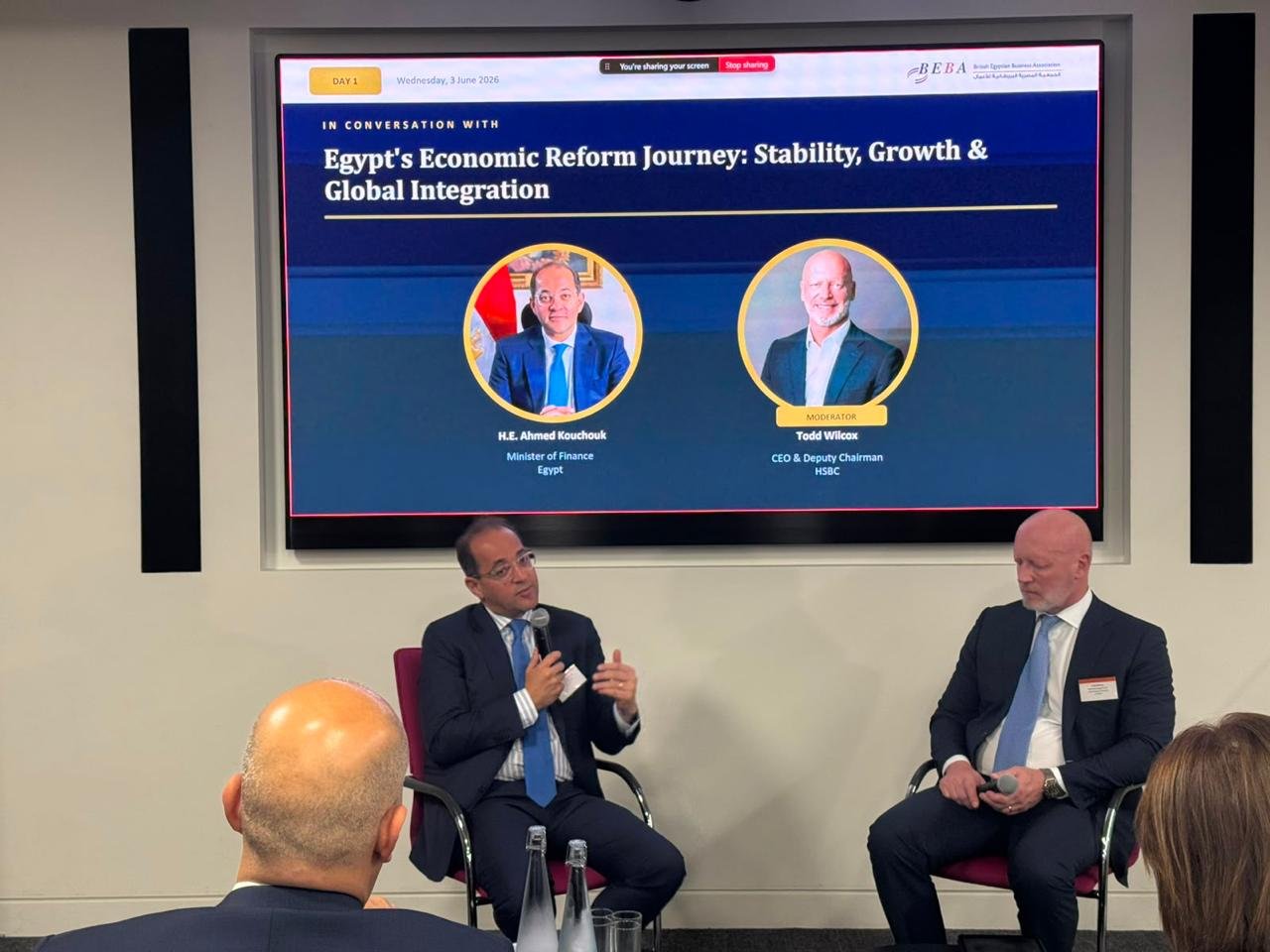
Dr. Khaled Abu Zahra, Chairman of the Tax and Customs Committee at the Egypt-Canada Business Council and Tax Partner at MEC Consulting, praised the positive messages and comprehensive economic vision presented by Egypt’s Minister of Finance, Ahmed Kouchouk, during the open dialogue organized by the Egyptian-British Business Association (BEBA) in London.
Abu Zahra stated that the financial indicators highlighted by the Minister, particularly the achievement of a 3.5% primary surplus and the rise of international reserves to approximately USD 53 billion, reflect the resilience and strength of the Egyptian economy and its ability to effectively withstand economic shocks and regional and global geopolitical challenges.
He noted that the private sector’s share of total investments, which reached around 59%, along with the 73% increase in private investments during the previous fiscal year and nearly 40% growth during the first half of the current fiscal year, demonstrates the success of Egypt’s economic reform program in strengthening investor confidence and improving the business environment. This progress has been reflected in the growing number of newly established companies and the expansion of both local and foreign investments in the Egyptian market.
Abu Zahra emphasized that the Ministry of Finance’s direction toward a more flexible economic and fiscal vision, based on providing further investment, tax, and customs incentives, represents one of the most important drivers of economic growth in the coming period. He added that digital transformation and the automation of the tax system have significantly contributed to simplifying procedures, enhancing transparency, and improving governance.
He further explained that these efforts have helped create a more attractive investment environment while supporting the integration of the informal economy into the formal state framework, thereby expanding the tax base and achieving greater tax fairness without imposing additional burdens on compliant investors.
Abu Zahra stressed that simplifying customs procedures and reducing clearance times for goods and production inputs directly contribute to lowering manufacturing costs, while stable tax policies supported by smart digital solutions provide investors with greater clarity and confidence, encouraging business expansion and the injection of new investments.
He also pointed out that incentives and facilities directed toward productive sectors, particularly non-oil industries and the telecommunications sector, will enhance the competitiveness of Egyptian products and boost exports, thereby increasing the country’s foreign currency revenues.
In conclusion, Abu Zahra commended the Ministry of Finance’s strategy aimed at reducing government debt and maintaining a downward trajectory for external debt by approximately USD 1–2 billion annually, alongside the significant progress achieved in settling arrears owed to foreign partners in the petroleum sector, which have declined by nearly 67%.
He affirmed that these policies, coupled with the continued development of Egypt’s digital tax system and ongoing improvements to the investment climate, will strengthen the country’s creditworthiness and further position Egypt as one of the leading investment destinations in the Middle East and Africa.